Subterranean ant infestations across Salt Lake City originate deep beneath compacted valley soils, shifting sandstone retaining walls, and concrete driveway expansions. In foothill corridors such as Federal Heights and…
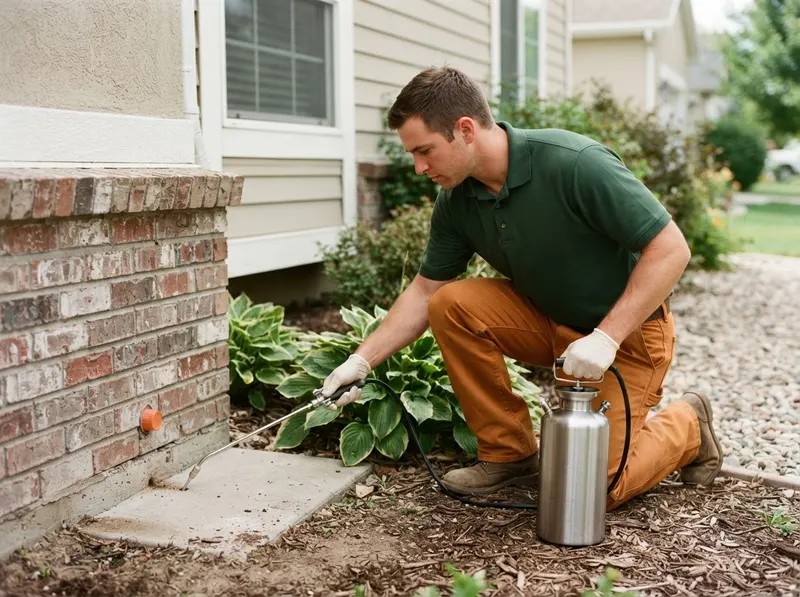
Subterranean ant infestations across Salt Lake City originate deep beneath compacted valley soils, shifting sandstone retaining walls, and concrete driveway expansions. In foothill corridors such as Federal Heights and East Bench, moisture gradients between dry scrub oak terrain and irrigated lawns drive pavement ant colonies directly beneath residential footings. A standard surface spray creates an immediate repellent barrier that simply causes subterranean colonies to bud, scattering single nests into 3 or 4 satellite colonies behind finished basement drywall. True remediation relies on non-repellent transfer chemistry, where foraging worker ants unknowingly carry concentrated active ingredients into subterranean chambers, transferring the lethal dose through trophallaxis to the egg-laying queen.
Older architectural foundations along The Avenues, Capitol Hill, and Sugar House present specific access challenges due to unsealed stone rubble footings and interior slab cracks. When colony populations exceed 30,000 workers, subterranean ant activity forces fine dirt mounds through expansion joints, hardwood transitions, and utility penetrations in finished basements. If the nesting site sits beneath an intact interior concrete slab, pressurized sub-slab injection delivers material directly to the void without requiring structural demolition. If foraging is limited to exterior stone walkways and patio pavers, deep soil injection saturation along foundation margins neutralizes the primary subterranean nest before workers breach interior living spaces.
Properties in low-elevation valley neighborhoods like Rose Park, Poplar Grove, Liberty Wells, and Ballpark frequently experience ant surges along subterranean sewer easements and high water table zones near the Jordan River. Treating these habitats requires careful volume calibration rather than high-toxicity broadcast spraying. Soil texture in these areas ranges from heavy clay to sandy loam, dictating injection pressures between 25 and 45 pounds per square inch to prevent chemical runoff while ensuring complete radial saturation of the nesting chamber. Pestiva Response Solutions performs these applications using targeted mechanical equipment that binds the formulation to subterranean soil particles, eliminating off-target drift and protecting domestic animal spaces.
Every job gets a firm, written price after a free on-site visit.
Tell us about your subterranean ant colony remediation job in Salt Lake City and we'll send a clear, written quote, usually the same day.
 Pestiva Response Solutions