Commercial kitchen vector sanitation in Salt Lake City provides an immediate biochemical resolution to high-moisture organic accumulation that traditional custodial mopping cannot clear. Along culinary corridors near…
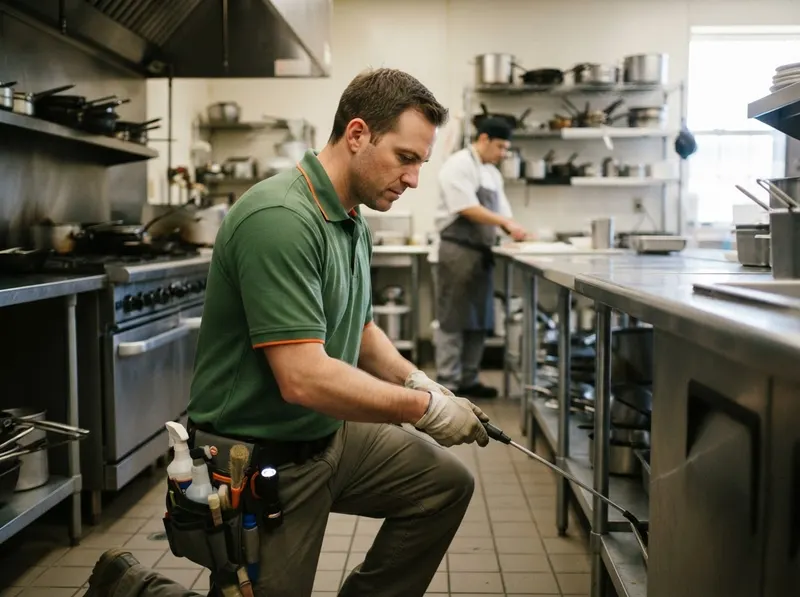
Commercial kitchen vector sanitation in Salt Lake City provides an immediate biochemical resolution to high-moisture organic accumulation that traditional custodial mopping cannot clear. Along culinary corridors near 900 South in the Ballpark district, historic basements in Capitol Hill, and high-volume dining lines in Sugar House, floor drains and beverage lines continuously trap lipids, starches, and dairy residues. These deposits serve as continuous food sources and breeding zones for German cockroaches (Blattella germanica) and phorid flies. The treatment process uses pressurized bio-enzymatic digestion foams that coat drain walls to degrade biofilms, combined with insect growth regulators applied behind stainless steel backsplashes and refrigeration compressor trays. This prevents juvenile insects from molting into breeding adults, terminating population life cycles within 72 hours of application.
Selecting standalone vector sanitation differs from standard chemical spraying. Spraying baseboards coats top surfaces with synthetic repellents, which causes nesting roaches to scatter deeper into hollow equipment legs and wall cavities behind dishwashing bays. In contrast, enzymatic vector sanitation strips the micro-environment down to bare metal and concrete. The process fits operations failing Salt Lake County Health Department pre-inspections or managing persistent insect landings near food lines. The trade-off involves operational timing: kitchen stations must pause line operations for 2 to 4 hours while dry foam expands through floor sinks and subterranean interceptors.
Salt Lake City's winter temperature shifts frequently force external rodent vectors indoors along foundation utility penetrations near the Poplar Grove and Rose Park rail zones, while sub-grade kitchens in The Avenues experience micro-climate humidity trapped under old concrete slabs. The protocol seals localized gaps, injects residual dust into dry voids, and flushes floor trenches directly. Pestiva Response Solutions operates as an independent regional team rather than an unvetted national brokerage, deploying certified technicians equipped with thermal diagnostic scanners to locate harborage points without damaging food preparation surfaces or staining prep walls.
Every job gets a firm, written price after a free on-site visit.
Tell us about your commercial kitchen vector sanitation job in Salt Lake City and we'll send a clear, written quote, usually the same day.
 Pestiva Response Solutions